



I used to wake up every morning after poker night feeling like I got hit by an eight-wheeler. Don’t try to push through this like a moron. Not when four simple changes can flip your mornings back into the start of a productive day. And I only need two minutes to show you how.
Most of us wake up groggy, rushed, or already behind. Throw in three to five hours of bluffing and calling in poker and it didn’t matter how much sleep I got or when I went to bed, I’d still wake up with a light headache, sore eyes, and the urge to yeet my alarm across the room.
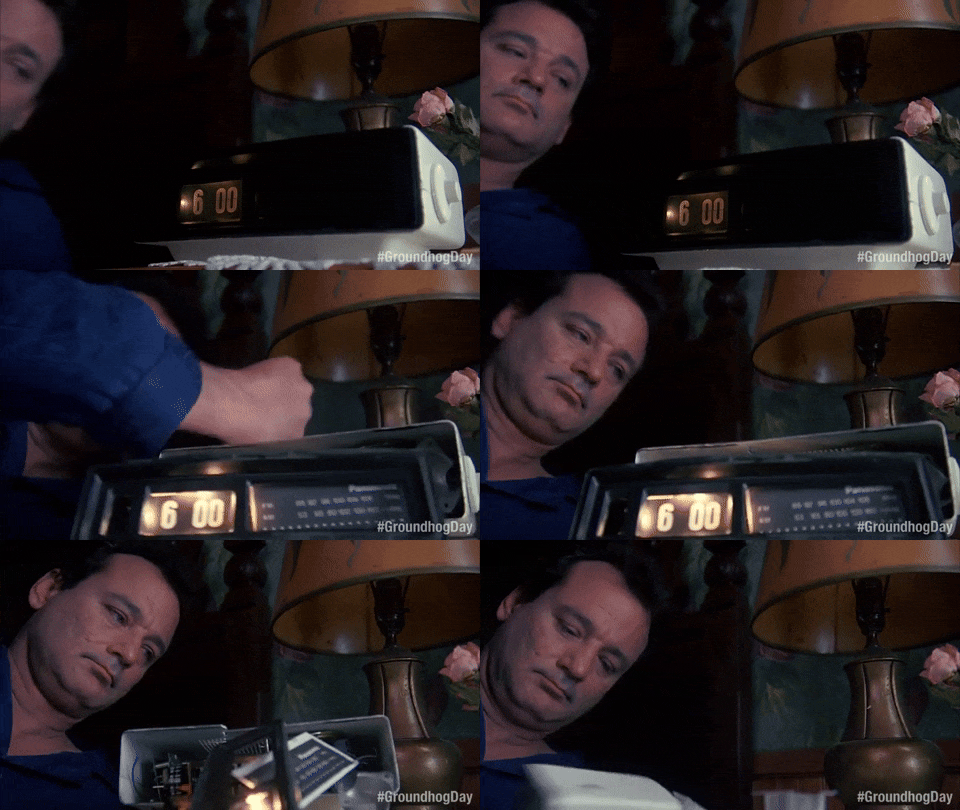
So how do you fix this? Good news, because VP or VIP (short for very-important-player) has three fixes for you and one bonus. Even if you only play on Friday nights, why would you want your Saturday morning after poker to be miserable? I used to spend that time doing full hand reviews. You’re telling me you’d rather waste it under the covers?
Why your routine the morning after poker night actually matters?
Feeling wiped after a late-night session is normal. Most amateur players only get time to play at night, so fatigue comes with the territory. The problem is, most people shrug it off. They assume it’s just part of poker life and keep dragging themselves through the next morning. If you only play once a month, maybe you can get away with that. But for anyone playing weekly or trying to improve, ignoring this costs you more than a little grogginess.

- Poker Fatigue: Over time, exhaustion makes the game less fun. When I first got serious, I went through stretches where fatigue had me questioning whether poker was even worth it. The game hadn’t beaten me, my energy had.
- Lost Analysis: Mornings are prime time for reviewing hands. Skip that and you miss your clearest chance to spot leaks and learn from mistakes. If you’re always too drained to review, you’re leaving free progress on the table.
1. The Three-Second Rule
This one’s a self-motivational hack used in all kinds of settings, like overcoming social anxiety, and it’s all about acting before your brain talks you out of it.

Your brain is wired to avoid discomfort and save energy. That’s why sleeping in feels so natural. But you can override that instinct. If you move before your logical brain kicks in, you shut down the part of your mind that invents reasons to stay in bed.
Behavioral psychology shows that hesitation fuels avoidance. The longer you wait, the more excuses your brain creates.
Here’s how it works: the second your alarm goes off, take action — sit up, stand up, or launch yourself out of bed. Don’t give yourself more than three seconds to think. If you pause, even for a moment, your brain will start crafting reasons to stay put.
When I first tested this, I put my phone across the room. The rule was simple: before I could turn off the alarm, I had to be fully dressed. That meant I’d hear the alarm, remember “three seconds,” and jump out of bed to get ready. By the time I crossed the room, I was already dressed and past the point of no return. The option to crawl back into bed like a PIGS IN A BLANKET was gone. Do it tomorrow morning and thank me later.
2. Ultradian Rhythm Sleep
The idea that adults need a solid eight hours of uninterrupted sleep is kinda a myth. It’s also actually pretty new. Historical evidence shows that people used to sleep in two chunks: a first period of sleep, a brief wakeful interval in the middle of the night, and then a second sleep until morning. This “first sleep, second sleep” pattern appears in literature, historical records, and even studies of present-day hunter-gatherer societies. If you’ve ever woken up at 3 a.m. feeling wide awake and panicked, it may just be your body following its natural cycles.
The principle behind Ultradian Rhythm Sleep is that our brains operate on 90-minute energy cycles. Each cycle includes stages of deep sleep, REM, and light sleep. Waking in the middle of a cycle leaves you tired, while waking at the end of a cycle aligns with your body’s natural rhythm and leaves you feeling sharper.
A growing body of evidence from both science and history suggests that the eight-hour sleep may be unnatural.
Stephanie Hegarty – BBC World Service
To use this method, first track your sleep non-poker nights to identify when your natural cycles end. (You can use a sleep app for this.) Once you have a rough sense of your rhythm, plan your wake-up times around full 90-minute cycles. This might mean waking at six, seven and a half, or nine hours of total sleep.
For example, if I wake up at 7 a.m. after getting six hours of sleep, which is pretty good for a morning after poker night, I accept it and get up instead of trying to doze off to reach six and a half hours, because that would only leave me feeling worse.
3. Water and A Few Movements
Poker nights often mean sitting for hours with caffeine or alcohol. I do not want to sound like a Twitter self-care guru posting life tips , that is not the point of Verifam.
But there are two ways water can actually save your morning. A glass tells to your body it is time to move, even if you don’t feel like you need one. Pair this with twenty seconds of explosive movement like pushups, jumping jacks, or also pacing around your space, and your blood circulation kicks in with your focus.
Another fast trick is splashing cold water on your face. For people who do not drink coffee, this one is especially useful, because coffee is for weaklings who struggle to use their own mind to power themselves through the day, kidding, sort of. Think of it as a three-redbull-equivalent wake-up without the heart attack. It is simple, fast, and effective, and requires nothing more than what is already in your bathroom.

BONUS: “I’m not tired!”

This trick might not have worked for Joffrey, but it strangely worked for me. Whenever I felt drained in the morning, I would simply think, “But I’m not tired.” Just that. In my head.
I do not know why it worked, and I do not have a scientific explanation, but somehow it gave me a shift. It was like my brain went, “Maybe you’re right,” and I could move on to something more useful instead of spiraling into that half-asleep fog. It does not override an all-nighter or serious exhaustion, but for day-to-day fatigue after a poker session, it helped me stop think about my tiredness, especially back when insomnia was winning.
Remember to be your own friend
If you follow these four tips, your morning after poker night will feel different. Even doing just one, like tip three, drinking a glass of water and splashing your face, will kickstart your system better than lying in bed scrolling through your phone ever will.
Some mornings will still be rough. You may hit snooze too many times, or your body may feel like it went ten rounds at the table. That is normal, so stop beating yourself up. Consistency is what matters.
Small actions compound over time, and your energy, focus, and poker performance will reflect that, without any motivational tweets or self-help BS.
My parting words at the table
If you liked this post, let me know in the comments and tell me what to cover next. You can also send me an email or use the contact form. Check out some of my other posts here, all designed to help you become a smarter and stronger poker player through edutainment.
PLEASE REMEMBER, resetting your mornings after poker is part of resetting your game.
As always, play poker responsibly.
